I know why you are here.
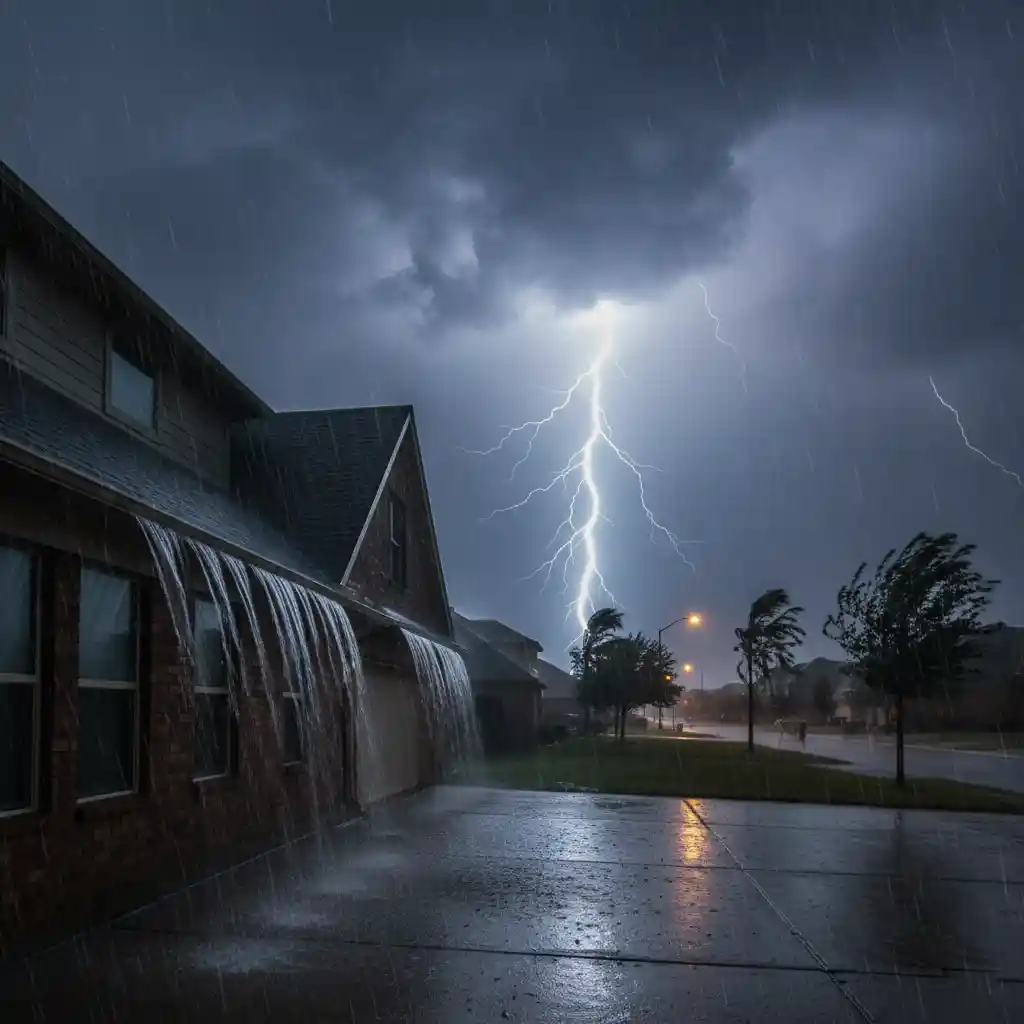
It’s probably 2 AM. There is a thunderstorm raging outside—maybe it’s a severe squall line moving through DFW, or the tail end of a hurricane hitting Houston. You heard a drip, drip, drip. You turned on the light, and there it is: a spreading brown stain on your ceiling.
Your first instinct? Panic.
Your second instinct? Call every “24/7 Roofer” on Google.
Stop. Take a breath.
I’ve been in this industry for years, and I’ve seen homeowners make expensive, dangerous mistakes in the heat of the moment. Before you pay someone a $500 “emergency fee” just to show up, let me tell you the truth about emergency roof repair in Texas.
The “24/7” Myth: What Really Happens at Night
Let’s get real. When you see “24/7 Emergency Service,” what do you think that means?
You probably imagine a crew showing up in 30 minutes, climbing onto your roof in the pouring rain, and fixing the shingles right there.
In my experience, that almost never happens. And frankly, you shouldn’t want it to.
No sane, licensed roofer is going to climb a 2-story slippery roof in the middle of a Texas lightning storm. It’s suicide.
Here is what “24/7” actually means:
-
They answer the phone (or an answering service does).
-
They put you on the “Priority List” for the next morning.
-
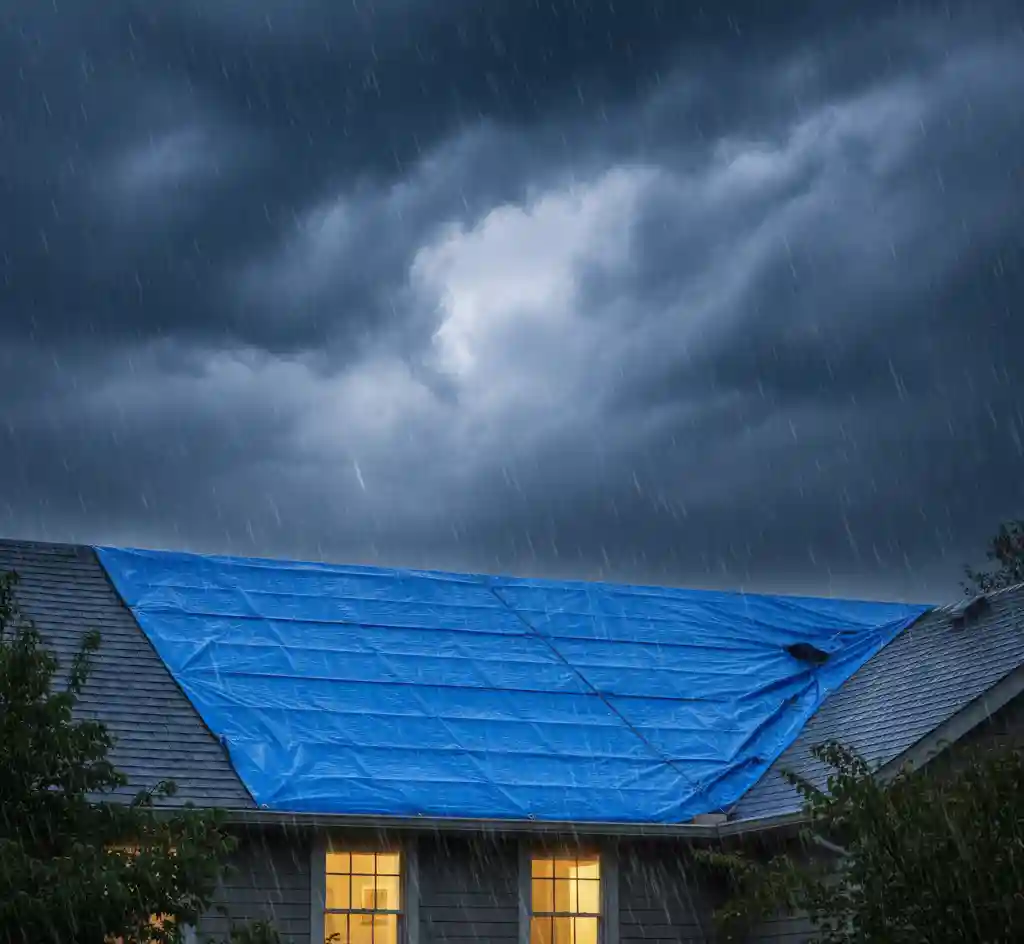
Best case scenario: If the rain slows down, they come out to do a “Tarp Over” (Emergency Tarping). They aren’t fixing the roof; they are putting a bandage on it.
So, if a roofer tells you he can’t fix it tonight, he isn’t being lazy. He’s being safe.
What YOU Should Do (While You Wait)
Since the cavalry isn’t coming for a few hours, it’s up to you to minimize the damage.
1. Don’t Be a Hero
I cannot stress this enough. Do not climb on the roof.
I saw a homeowner in Austin slide right off his eaves trying to put a plastic sheet over a leak during a hail storm. A broken leg costs way more than water damage. Stay inside.
2. Pop the Bubble (The “Gross” Part)
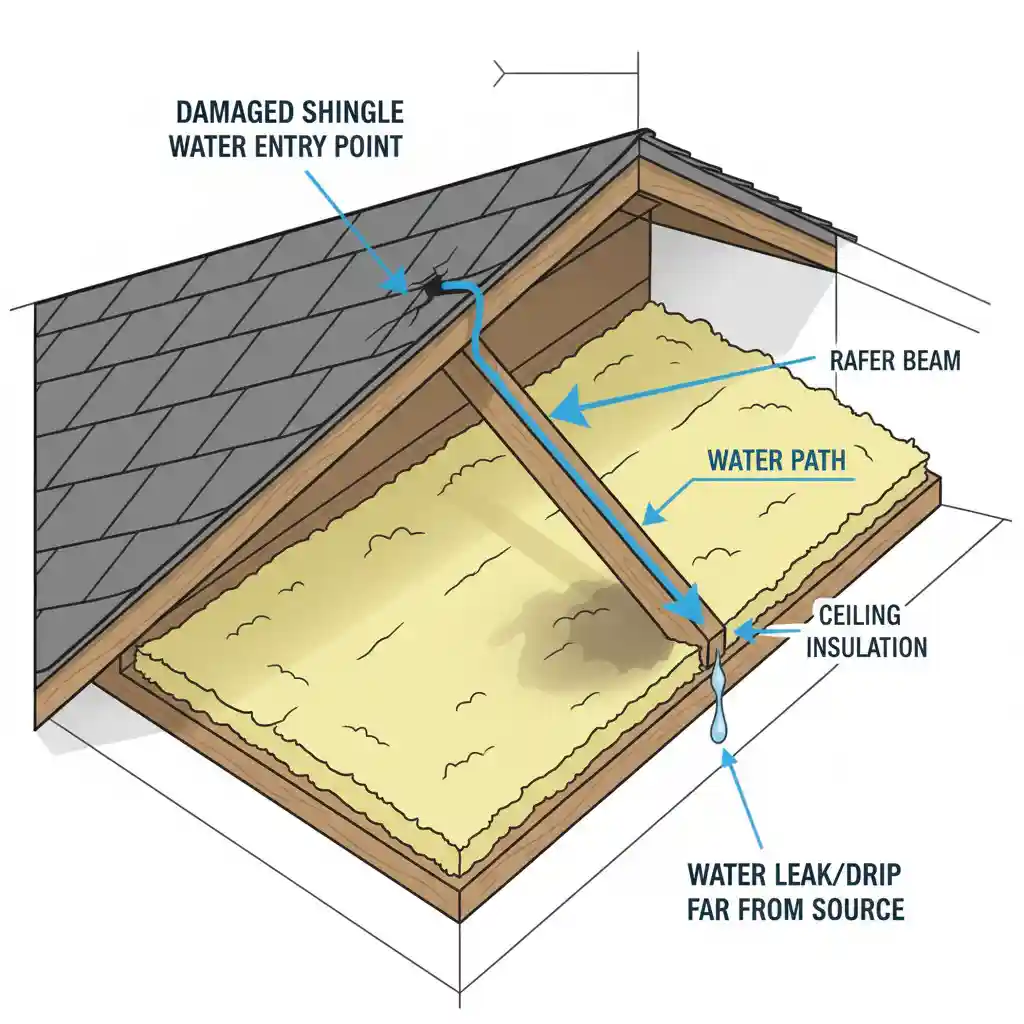
If you see a bulge in your ceiling paint holding water, it looks scary. Like it’s going to explode.
My advice? Explode it yourself, but strictly on your terms.
-
Put a big bucket underneath.
-
Grab a screwdriver.
-
Poke a small hole right in the center.
-
Let the water drain into the bucket.
-
Why? If you don’t, the water weight will spread, soak the drywall, and eventually collapse the entire ceiling sheet. A small hole is easy to patch. A collapsed ceiling is a disaster.
3. Document Everything
Insurance adjusters are skeptical by nature. Take photos of the water entering while it is happening. It proves the damage was “sudden and accidental” (covered) and not “long-term neglect” (denied).

The “Texas Tax”: Emergency vs. Regular Costs
Living in Texas means dealing with hail in Dallas, humidity in Houston, and wind in the Panhandle.
Emergency services come with a premium. I call it the “Panic Tax.” Here is a realistic breakdown of what you might pay for an emergency call-out versus a scheduled repair.
| Service | Emergency (2 AM / Weekend) | Standard (Scheduled M-F) |
| Call-Out Fee | $200 – $400 (Just to arrive) | $0 – $100 |
| Labor Rate | $150 – $250 per hour | $75 – $125 per hour |
| The “Fix” | Temporary Tarping Only | Permanent Shingle Repair |
| Warranty | Usually None (It’s temporary) | 1-5 Years on Labor |
My take: If the leak is a slow drip and you can catch it with a bucket, wait until morning. You will save at least
just by calling during business hours.
A Real Story: The Houston “Quick Fix” Disaster
I want to share a story from a homeowner I helped a few years back—let’s call him Mark from Houston.
After a hurricane passed, Mark had a few shingles missing. A guy in a truck (a “Storm Chaser”) knocked on his door and offered to fix it right then for $500 cash. Mark agreed because he was scared of the next rain.
The guy climbed up, slapped some roofing cement (mastic) over the hole, and left.
The result?
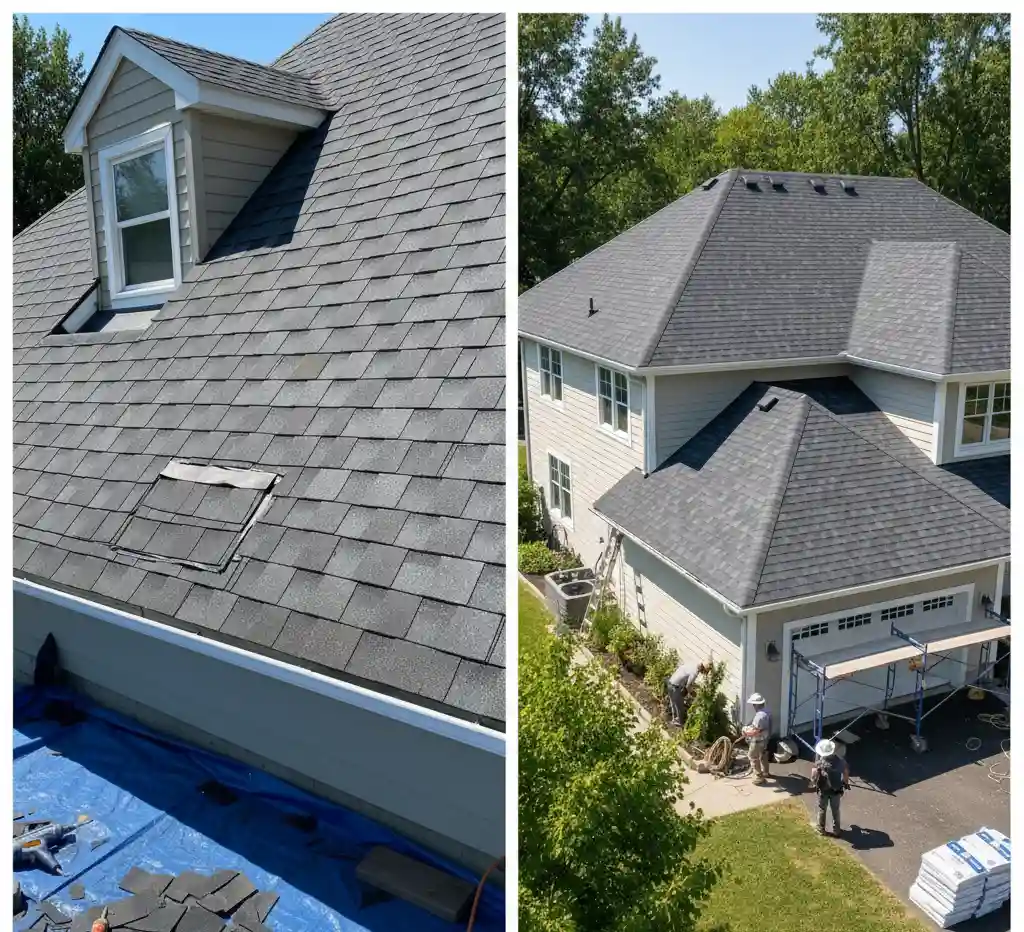
The cement trapped moisture inside the decking. In the Houston heat, that trapped moisture turned into black mold. Six months later, Mark didn’t need a patch; he needed to replace 400 square feet of rotted decking and rafters.
The lesson: Fast is not always good. Emergency repairs should be temporary tarping only. Permanent repairs need dry wood and proper technique.
When to Call the Pros?
So, is it ever worth paying the emergency fee? Yes.
In my opinion, you call immediately if:
-
The structure is compromised: A tree branch is literally inside your living room.
-
Fire Risk: Water is running through your light fixtures or electrical panel. (Turn off the main breaker first!)
-
Unlivable: The leak is soaking your bed or the only livable space in the house.
For everything else? Put a bucket under it, take a picture, and call us to schedule a priority inspection for the morning.
Ready to get on the schedule?
We have a network of licensed Texas roofers who handle emergency tarping and storm restoration. They won’t scam you, and they know how to handle insurance claims.