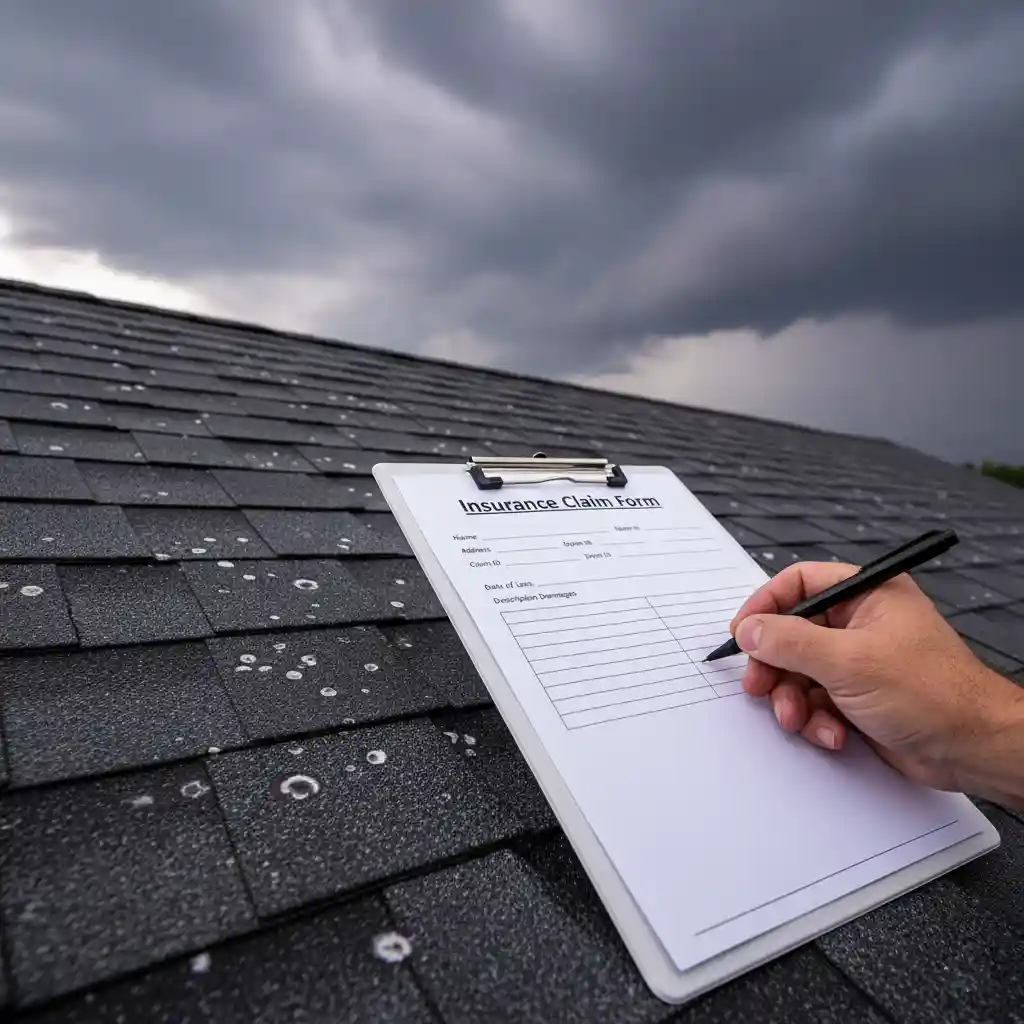
From Hail to Hurricanes: Is Your Roof Actually Okay?
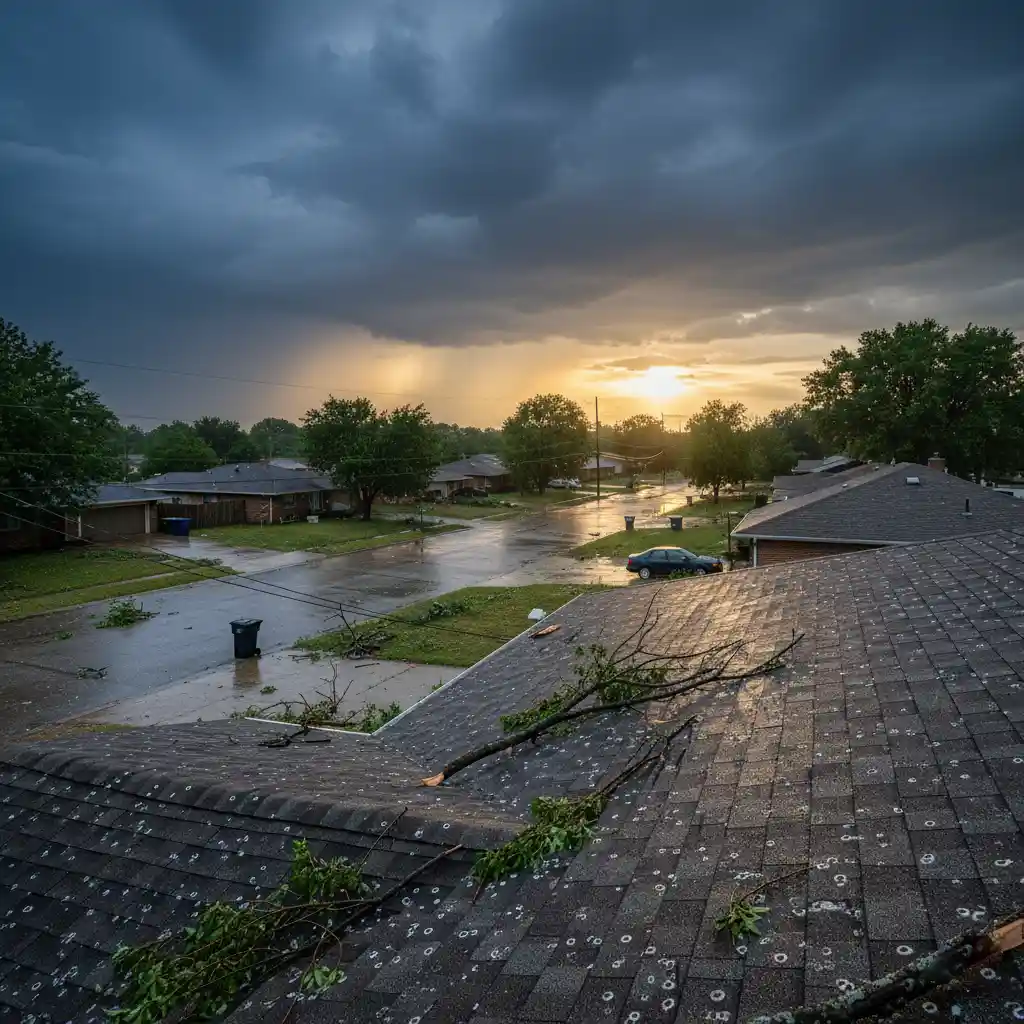
Living in the United States means your home is a sitting duck for some of the most volatile weather on the planet. From the hail belts of Texas and Colorado to the hurricane coasts of Florida, and the ice-heavy winters of the Northeast, your roof takes a beating.
The dangerous part isn’t the damage you can see from the driveway, like a missing patch of shingles. It’s the damage you can’t see.
Many homeowners assume that if water isn’t dripping onto the kitchen table, the roof is fine. But “functional damage” often hides in plain sight, slowly rotting your decking or voiding your manufacturer’s warranty long before the first leak appears.
Here is what different types of natural disasters actually do to your roof—and what your insurance adjuster is going to look for.
Hail: The “Silent” Life Shortener
Hail is tricky. Unless the hailstones are the size of baseballs, they rarely punch clean holes through the roof. Instead, they “bruise” the shingles.
Think of it like a bruise on an apple. The skin isn’t broken, but the fruit underneath is soft and rotting.
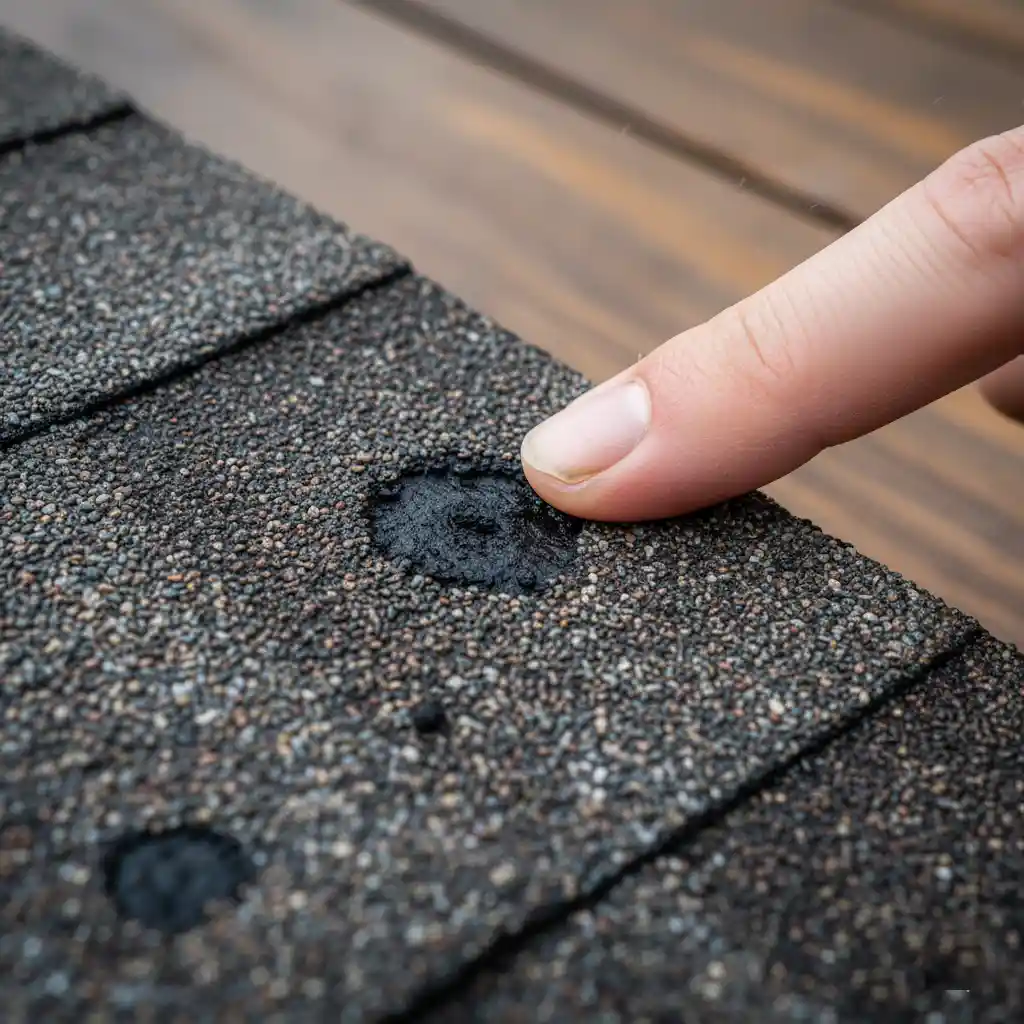
When hail hits an asphalt shingle, it knocks off the protective mineral granules (the sandpaper-like texture). These granules protect the asphalt from the sun. Once they are gone, UV rays bake the exposed asphalt, causing it to crack and fail within a year or two.
The “Mat Fracture” Test:
Roofers check for this by feeling the shingle. If the fiberglass mat underneath is cracked from the impact, that shingle is dead. It’s no longer waterproof, even if it looks okay from the street.
Wind: It’s Not Just About Missing Shingles
We all know what wind damage looks like: shingles scattered across the lawn. But there is a subtler killer called “Wind Uplift.”
During a storm, high winds don’t just blow over your roof; they create a vacuum effect that pulls up on it. This can break the adhesive seal that holds the shingles down.
Once that seal is broken, the shingle might lay back down flat after the storm passes. To you, it looks perfect. But the next time a breeze comes through, that shingle will flap up and down, snapping off or allowing rain to drive underneath it.
Look for the “Crease”:
If you see a dark horizontal line about an inch below the shingle above it, that’s a crease. It means the shingle has been bending backward in the wind. This is a definitive sign of failure that insurance usually covers.
Snow and Ice: The Weight and the Dam
For homeowners in the North, the danger isn’t speed or impact; it’s physics.
The Ice Dam Nightmare
This happens when your attic is too warm. Heat escapes through the roof, melts the snow on top, and the water runs down to the cold eaves (gutters) where it refreezes. This creates a wall of ice.
As more snow melts, water pools behind this ice dam. Since shingles are designed to shed water running down, they cannot handle water standing still. The water backs up under the shingles and leaks into your walls.
Structural Stress
Wet snow is incredibly heavy. If your roof structure is older or wasn’t built to code, a massive snowfall can cause bowing in the rafters or, in extreme cases, collapse. If you hear creaking or see drywall cracks inside during a snowstorm, that is a structural emergency.
Wildfires: The Ember Threat
On the West Coast, the threat is heat. But surprisingly, it’s rarely the giant wall of flames that burns houses down—it’s the embers.
Wind-blown embers can travel miles ahead of a wildfire. They land in your gutters (which are full of dry leaves) or get sucked into attic vents.
If you live in a fire zone, having a Class A Fire Rated roof is non-negotiable.
-
Asphalt: Most fiberglass shingles are Class A.
-
Metal: Naturally Class A.
-
Wood Shake: The most dangerous option unless chemically treated (and even then, risky).
Summary: Damage Types & Insurance Verdict
Knowing what caused the damage helps you understand if your insurance policy (HO-3) will likely cover it.
| Disaster Type | Visible Signs | Hidden Signs | Insurance Likelihood |
| Hail | Dents on vents/gutters | Granule loss, bruised mat | High (If damage is widespread) |
| Wind | Missing shingles | Broken seals, creased tabs | High (For damaged sections) |
| Ice Dams | Icicles, water behind walls | Wet insulation, rotted deck | Varies (Often covers interior, not the ice removal) |
| Fallen Tree | Crushed roof structure | Cracked rafters | High (Usually covers removal & repair) |
| Wear & Tear | Curling, bald spots | Old age, blistering | Zero (This is maintenance) |
Don’t Wait for the Leak
The biggest mistake homeowners make after a storm is waiting.
Most insurance policies have a “statute of limitations” on filing a claim (often 1 year from the date of the storm). If you wait until the roof leaks two years later, the insurance company will look at the storm data, see no recent activity, and deny your claim as “neglect.”
The smart move? If your neighborhood was hit by a storm, get a professional inspection, even if you don’t see damage. Most reputable roofers offer this for free. They know exactly what “bruises” and “creases” look like and can document them for your adjuster.
⛈️ Was Your Home in the Path of the Storm?
Damage isn’t always visible from the ground. Have a licensed professional inspect your roof for hidden wind or hail damage before your claim window closes.
*Peace of mind costs nothing. Get checked today.*